I. Initial setup & service authentication
terraform {
required_version = ">= 0.14.0"
  required_providers {
    openstack = {
      source  = "terraform-provider-openstack/openstack"
      version = "~> 1.53.0"
    }
  }
}

# Configure the OpenStack Provider
provider "openstack" {
  user_name   = "usera"
  tenant_name   = "project_name"
  password    = "pwd"
  auth_url    = <fptcloud identity endpoint>
  region      = "RegionOne"
}

# Create infratructures
resource "openstack_compute_instance_v2" "test-server" {
  # ...
}
| Parameters |
Description |
Environment Variable |
auth_url |
URL of Identity Service |
OS_AUTH_URL |
region |
Region of FPT cloud |
OS_REGION_NAME |
user_name |
Username provided by FPT Cloud |
OS_USERNAME |
user_id |
|
OS_USER_ID |
user_domain_name |
|
OS_USER_DOMAIN_NAME |
user_domain_id |
|
OS_USER_DOMAIN_ID |
tenant_id |
|
OS_PROJECT_ID |
tenant_name |
VPC name provided by FPTCloud |
OS_PROJECT_NAME |
project_domain_name |
|
OS_PROJECT_DOMAIN_NAME |
project_domain_id |
|
OS_PROJECT_DOMAIN_ID |
domain_name |
|
OS_DOMAIN_NAME |
domain_id |
|
OS_DOMAIN_ID |
insecure |
|
OS_INSECURE |
interface |
|
OS_INTERFACE |
| ... |
|
|
II. Core components
A. Networking
   resource "openstack_networking_router_v2" "router_1" {
        name                = "my_router"
        admin_state_up      = true
        external_network_id = "f67f0d72-0ddf-11e4-9d95-e1f29f417e2f"
    }
| Parameters |
Description |
Required |
region |
Region of vRouter |
|
name |
Name of vRouter |
|
external_network_id |
ID of external gateway, a router with an external gateway is required if any compute instances or load balancers will be using floating IPs. |
|
| ... |
|
|
    resource "openstack_networking_network_v2" "network_1" {
      name           = "network_1"
      admin_state_up = "true"
    }

    resource "openstack_networking_subnet_v2" "subnet_1" {
      name       = "subnet_1"
      network_id = openstack_networking_network_v2.network_1.id
      cidr       = "192.168.199.0/24"
      ip_version = 4
    }

    resource "openstack_compute_secgroup_v2" "secgroup_1" {
      name        = "secgroup_1"
      description = "a security group"

      rule {
        from_port   = 22
        to_port     = 22
        ip_protocol = "tcp"
        cidr        = "0.0.0.0/0"
      }
    }

    resource "openstack_networking_port_v2" "port_1" {
      name               = "port_1"
      network_id         = openstack_networking_network_v2.network_1.id
      admin_state_up     = "true"
      security_group_ids = [openstack_compute_secgroup_v2.secgroup_1.id]

      fixed_ip {
        subnet_id  = openstack_networking_subnet_v2.subnet_1.id
        ip_address = "192.168.199.10"
      }
    }

    resource "openstack_compute_instance_v2" "instance_1" {
      name            = "instance_1"
      security_groups = [openstack_compute_secgroup_v2.secgroup_1.name]

      network {
        port = openstack_networking_port_v2.port_1.id
      }
    }
| Parameters |
Description |
Type |
Default |
Required |
name |
Name of network. |
string |
|
Yes |
shared |
Specifies whether the network resource can be accessed by any tenant or not. |
bool |
false |
No |
| ... |
|
|
|
|
   resource "openstack_networking_network_v2" "network_1" {
      name           = "tf_test_network"
      admin_state_up = "true"
    }

    resource "openstack_networking_subnet_v2" "subnet_1" {
      network_id = openstack_networking_network_v2.network_1.id
      cidr       = "192.168.199.0/24"
    }
| Parameters |
Description |
Type |
Default |
Required |
network_id |
ID of network from previous step. |
string |
|
Yes |
cidr |
CIDR representing IP range for this subnet, based on IP version. |
string |
|
Yes |
ip_version |
IP version of subnet. |
int |
4 |
No |
enable_dhcp |
Enable DHCP for subnet. |
bool |
true |
No |
allocation_pools |
IP pools of DHCP . |
list |
|
No |
gateway_ip |
Default IP Gateway. |
string |
|
No |
host_routes |
List of default static host routes. |
list |
|
No |
dns_nameservers |
List of DNS server of subnet. |
list |
|
No |
prefixlen |
Prefix length of subnet. |
int |
|
No |
| ... |
|
|
|
|
    resource "openstack_networking_network_v2" "network_1" {
      name           = "network_1"
      admin_state_up = "true"
    }

    resource "openstack_networking_port_v2" "port_1" {
      name           = "port_1"
      network_id     = openstack_networking_network_v2.network_1.id
      admin_state_up = "true"
    }
| Parameters |
Description |
Type |
Default |
Required |
network_id |
ID of network from previous step. |
string |
|
Yes |
mac_address |
Fix MAC address for port. |
string |
|
No |
name |
Port name. |
string |
|
No |
fixed_ips |
Fixed IP for port. |
list |
|
No |
allowed_address_pairs |
An IP/MAC Address pair of additional IP addresses that can be active on this port. |
list |
|
No |
security_group_ids |
A list of security group IDs to apply to the port. |
list |
|
No |
| ... |
|
|
|
|
    resource "openstack_networking_floatingip_v2" "floatip_1" {
      pool = "provider-net4"
    }
| Parameters |
Description |
Type |
Default |
Required |
pool |
The name of the pool from which to obtain the floating IP. Changing this creates a new floating IP. E.g. provider-net4 |
string |
|
Yes |
port_id |
ID of an existing port with at least one IP address to associate with this floating IP. |
string |
|
No |
fixed_ip |
Fixed IP of the port to associate with this floating IP. |
string |
|
No |
description |
Human-readable description for the floating IP. |
string |
|
No |
| ... |
|
|
|
|
    resource "openstack_networking_secgroup_v2" "secgroup_1" {
      name        = "secgroup_1"
      description = "My neutron security group"
    }
| Parameters |
Description |
Type |
Default |
Required |
name |
A unique name for the security group. |
string |
|
Yes |
description |
Human-readable description for the security group. |
string |
|
No |
tenant_id |
The owner of the security group. Required if admin wants to create a port for another tenant. |
string |
|
No |
| ... |
|
|
|
|
    resource "openstack_networking_secgroup_v2" "secgroup_1" {
      name        = "secgroup_1"
      description = "My neutron security group"
    }

    resource "openstack_networking_secgroup_rule_v2" "secgroup_rule_1" {
      direction         = "ingress"
      ethertype         = "IPv4"
      protocol          = "tcp"
      port_range_min    = 22
      port_range_max    = 22
      remote_ip_prefix  = "0.0.0.0/0"
      security_group_id = openstack_networking_secgroup_v2.secgroup_1.id
    }
| Parameters |
Description |
Type |
Default |
Required |
security_group_id |
The security group id the rule should belong to, the value needs to be an Openstack ID of a security group in the same tenant. |
string |
|
Yes |
direction |
ingress or egress. |
string |
|
Yes |
ethertype |
Layer 3 protocol type (IPv4, IPv6). |
string |
|
Yes |
protocol |
Layer 4 protocol type (tcp, udp, icmp, ...). |
string |
|
Yes |
remote_ip_prefix |
remote CIDR |
string |
|
No |
remote_group_id |
The remote group id, the value needs to be an Openstack ID of a security group in the same tenant. |
string |
|
No |
port_range_min |
|
int |
|
No |
port_range_max |
|
int |
|
No |
description |
A description of the rule. |
string |
|
No |
| ... |
|
|
|
|
B. Storage
    resource "openstack_blockstorage_volume_v3" "volume_1" {
      region      = "RegionOne"
      name        = "volume_1"
      description = "first test volume"
      volume_type = "PremiumSSD-2000_floor5"
      availability_zone = "floor5"
      size        = 40
    }
| Parameters |
Description |
Type |
Default |
Required |
size |
The size of the volume to create (in gigabytes). |
int |
|
Yes |
name |
A unique name for the volume. |
string |
|
No |
description |
A description of the volume. |
string |
|
No |
availability_zone |
The availability zone for the volume. |
string |
|
No |
image_id |
The image ID from which to create the volume. |
string |
|
No |
volume_type |
The type of volume to create. |
string |
|
No |
| ... |
|
|
|
|
C. Compute
resource "openstack_blockstorage_volume_v3" "myvol" {
  name = "myvol"
  size = 40
  volume_type = "PremiumSSD-2000_floor5"
  availability_zone = "floor5"
}

resource "openstack_compute_instance_v2" "myinstance" {
  name            = "myinstance"
  image_name        = "UBUNTU-20.04-10072023"
  flavor_name       = "Small.2"
  key_pair        = "my_key_pair_name"
  security_groups = ["default"]
  availability_zone = "floor5"

  network {
    name = "my_network"
  }
}

resource "openstack_compute_volume_attach_v2" "attached" {
  instance_id = openstack_compute_instance_v2.myinstance.id
  volume_id   = openstack_blockstorage_volume_v3.myvol.id
}
| Parameters |
Description |
Type |
Default |
Required |
|
| name |
A unique name for the resource. |
string |
|
Yes |
|
| flavor_name |
The name of the desired flavor for the server. |
string |
|
Yes |
|
| image_name |
The name of the desired image for the server. |
string |
|
Yes |
|
| key_pair |
The name of a key pair to put on the server. |
string |
|
No |
|
| user_data |
cloud-init script, the user data to provide when launching the instance. |
string |
|
No |
|
| metadata |
|
map |
|
No |
|
| security_groups |
An array of one or more security group names to associate with the server. |
list |
|
No |
|
| network |
An array of one or more networks to attach to the instance. |
string |
|
No |
|
| block_device |
Configuration of block devices. |
list |
|
No |
|
| availability_zone |
The availability zone in which to create the server. |
string |
|
No |
|
| ... |
|
|
|
|
|
III. Example
This section focus on show up the actual use case of FPT Cloud Iac by using terraform to deploy new Web Application on FPT Cloud, the step described as the following:
- Setting up terraform
- Create new project directory include
main.tf file with the following content:
terraform {
required_version = ">= 0.14.0"
  required_providers {
    openstack = {
      source  = "terraform-provider-openstack/openstack"
      version = "~> 1.53.0"
    }
  }
}

# Configure the OpenStack Provider
provider "openstack" {
  user_name   = <user-name>
  tenant_id = <project-uuid>
  user_domain_name = <domain-name>
  password    = <password>
  auth_url    = <fptcloud identity endpoint>
  region      = "RegionOne"
}

# Network
data "openstack_networking_network_v2" "provider_net" {
  name = "provider-net5"
}

resource "openstack_networking_router_v2" "webapp_router" {
  name                = "webapp_router"
  admin_state_up      = true
  external_network_id = data.openstack_networking_network_v2.provider_net.id
}

resource "openstack_networking_network_v2" "webapp_network" {
  name           = "webapp_network"
  admin_state_up = true
}

resource "openstack_networking_subnet_v2" "webapp_subnet" {
  name            = "webapp_subnet"
  network_id      = openstack_networking_network_v2.webapp_network.id
  cidr            = "10.0.0.0/24"
  ip_version      = 4
  dns_nameservers = ["1.1.1.1"]
}

resource "openstack_networking_router_interface_v2" "webapp_router_interface" {
  router_id = openstack_networking_router_v2.webapp_router.id
  subnet_id = openstack_networking_subnet_v2.webapp_subnet.id
}

resource "openstack_compute_secgroup_v2" "webapp_secgroup" {
  name        = "webapp_secgroup"
  description = "Allow web traffic"
  rule {
    from_port   = 80
    to_port     = 80
    ip_protocol = "tcp"
    cidr        = "0.0.0.0/0"
  }
  rule {
    from_port   = 22
    to_port     = 22
    ip_protocol = "tcp"
    cidr        = "0.0.0.0/0"
  }
}

resource "openstack_compute_floatingip_v2" "webapp_floatingip" {
  pool = "provider-net5"
}

# Volume
data "openstack_images_image_v2" "ubuntu_image" {
  name = "UBUNTU-22.04-10072023"
}

resource "openstack_blockstorage_volume_v3" "webapp_volume" {
  name        = "webapp_volume"
  description = "Volume for webapp"
  size        = 40
  volume_type        = "Premium-SSD_floor5"
  image_id    = data.openstack_images_image_v2.ubuntu_image.id
}

# Instance
data "openstack_compute_keypair_v2" "webapp_key" {
  name = "webapp_key"
}

data "openstack_compute_flavor_v2" "s2_medium_1" {
  name = "2C2G"
}

/* Userdata
#cloud-config
package_update: true
chpasswd:
  list: |    root:<password-vm>
  packages:
  - nginx  - gitruncmd:
  - systemctl enable nginx
  - systemctl start nginx
  - git clone https://github.com/cloudacademy/static-website-example.git
  - cp -r ./static-website-example/* /var/www/html/
  - rm -r ./static-website-example*/

resource "openstack_compute_instance_v2" "webapp_instance" {
  name            = "webapp_instance"
  image_id        = data.openstack_images_image_v2.ubuntu_image.id
  flavor_id       = data.openstack_compute_flavor_v2.s2_medium_1.id
  key_pair        = data.openstack_compute_keypair_v2.webapp_key.name
  security_groups = [openstack_compute_secgroup_v2.webapp_secgroup.name]
  availability_zone = "floor5"

  user_data = "#cloud-config\npackage_update: true\nchpasswd:\n  list: |\n    root:Welcome***123\npackages:\n  - nginx\n  - git\nruncmd:\n  - systemctl enable nginx\n  - systemctl start nginx\n  - git clone https://github.com/cloudacademy/static-website-example.git\n  - cp -r ./static-website-example/* /var/www/html/\n  - rm -r ./static-website-example"
  network {
    name = openstack_networking_network_v2.webapp_network.name
  }
  block_device {
    uuid                  = openstack_blockstorage_volume_v3.webapp_volume.id
    source_type           = "volume"
    destination_type      = "volume"
    boot_index            = 0
    delete_on_termination = true
  }
}

resource "openstack_compute_floatingip_associate_v2" "webapp_floatingip_associate" {
  floating_ip = openstack_compute_floatingip_v2.webapp_floatingip.address
  instance_id = openstack_compute_instance_v2.webapp_instance.id
}

output "webapp_public_ip" {
  value       = openstack_compute_floatingip_v2.webapp_floatingip.address
  description = "Web Application URL"
}

output "webapp_private_ip" {
  value       = openstack_compute_instance_v2.webapp_instance.access_ip_v4
  description = "Web Application Private IP"
}
-
Deploying application
terraform init
terraform apply --auto-approve
-
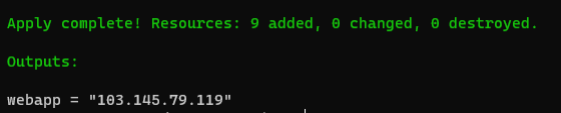
The result of terraform CLI:
-
Acces the floating IP and enjoy the result of webapp

-
Cleaning-up the whole resources created by IaC stack:
terraform destroy --auto-approve
References

 Lưu trữ dữ liệu đối tượng không giới hạn và truy xuất dữ liệu liên tục
 Certified DBaaS (cơ sở dữ liệu theo dạng dịch vụ) đầu tiên của MongoDB tại Việt Nam
 Tích hợp với máy chủ ảo dành cho 3D Rendering, AI hay ML
 Nền tảng phân tích dữ liệu đáng tin cậy cho doanh nghiệp và chuyên gia, giúp tối ưu chi phí vận hành lên đến 40% so với giải pháp BI khác.
 Sản phẩm hợp tác giữa FPT Cloud và CyRadar, cung cấp dịch vụ tường lửa với khả năng bảo vệ mạnh mẽ cho các ứng dụng web
 Sản phẩm hợp tác giữa FPT Cloud và CyRadar, dịch vụ cung cấp khả năng rà quét toàn diện, phân tích chi tiết và đánh giá lỗ hổng bảo mật để tăng cường an ninh thông tin cho hệ thống ứng dụng doanh nghiệp
 Sao lưu và khôi phục dữ liệu tức thời, an toàn và toàn vẹn dữ liệu
 Trở thành doanh nghiệp đầu tiên trải nghiệm bộ giải pháp phát triển AI toàn diện, được phát triển trên công nghệ mạnh mẽ bậc nhất từ NVIDIA!
 Giải pháp làm việc từ xa hiệu quả và an toàn cho doanh nghiệp
 Dịch vụ máy chủ ảo tiên tiến với khả năng mở rộng nhanh chóng
 Hiệu năng mạnh mẽ với hạ tầng riêng biệt
 Nâng cao năng lực, tính sẵn sàng của ứng dụng
 Tăng tốc phát triển ứng dụng yêu cầu hiệu năng cao bằng dịch vụ Kubernetes tích hợp với vi xử lý cao cấp GPU
 Giải pháp quản lý sự cố thông minh
 Dịch vụ cung cấp giải pháp khởi tạo và quản lý FPT ArgoCD được tạo ra từ dự án mã nguồn mở Argo
 Tăng cường khả năng quản lý tài sản dữ liệu doanh nghiệp
 Quản lý dữ liệu liền mạch & toàn diện